The thing stopping you is not the horse. It’s the picture in your head of what riding a horse involves, which almost certainly came from a film, and which features reins gripped in both fists and a lot of confident bouncing that you are quite sure you cannot do.
Put that picture down. It has nothing to do with what happens here.
Just Tell Me If I Can Do This
You can. Whether you’re 6 or 60, whether you’ve never been near a horse in your life, whether you’re actively a bit frightened of them.
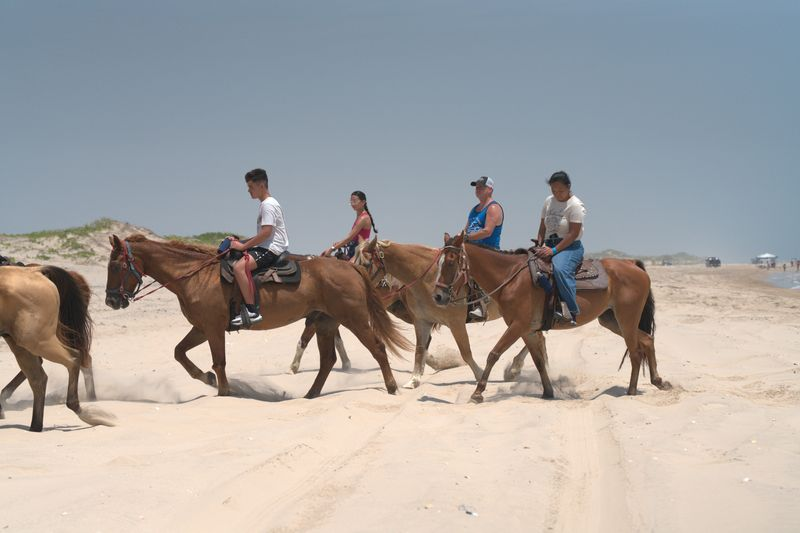
Guided beach rides at this park run for people with zero experience, and that isn’t a marketing line so much as a description of the average customer. Staff walk you through a short orientation before anyone climbs on. The horses are gentle and trained for exactly this work, guides watch every rider the whole way, and the animal underneath you spends the entire ride doing something remarkably simple, which is following the horse in front of it.
You Are Not Really Steering
This is the single most reassuring fact about the whole experience and almost nobody knows it in advance.
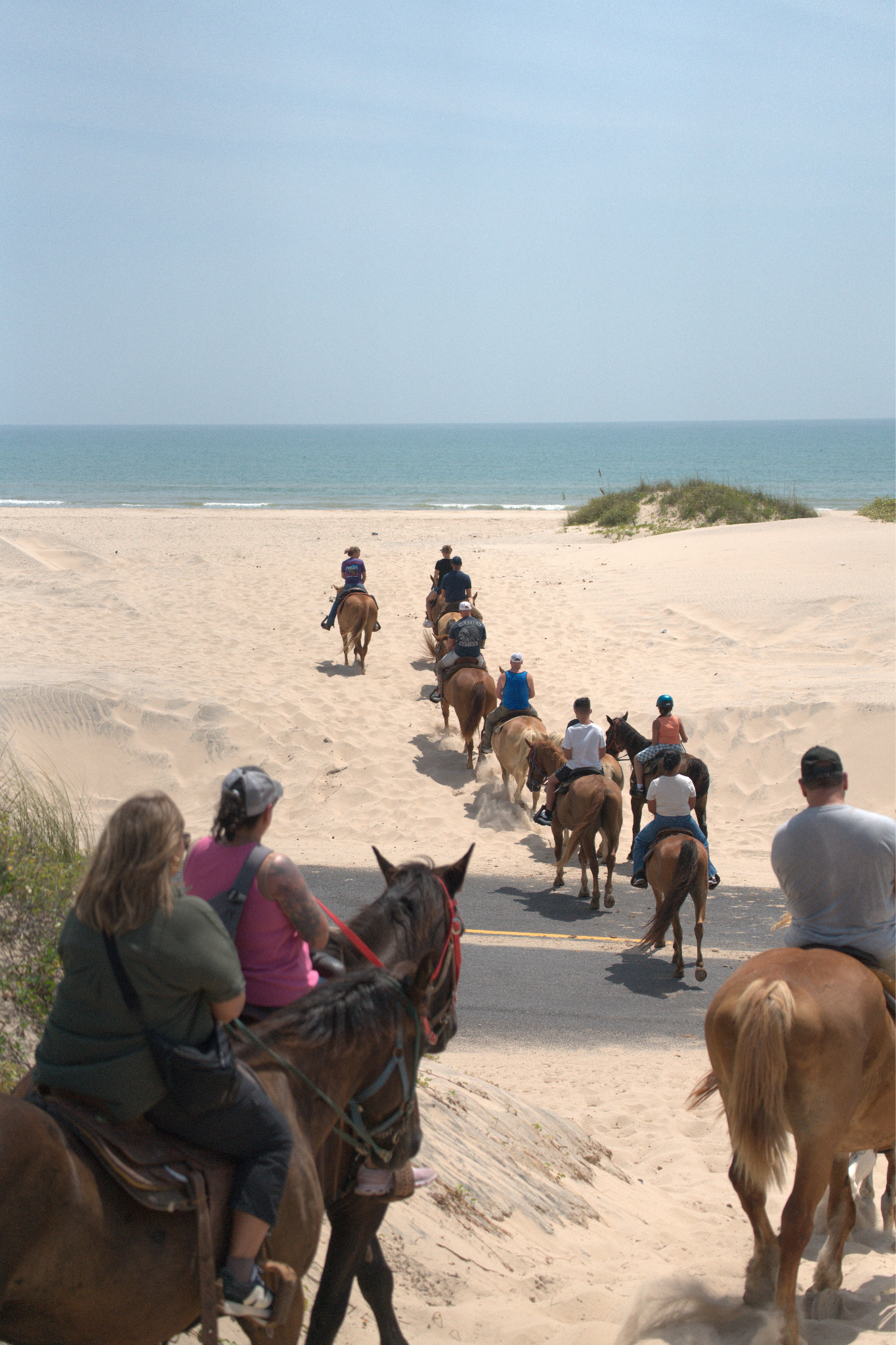
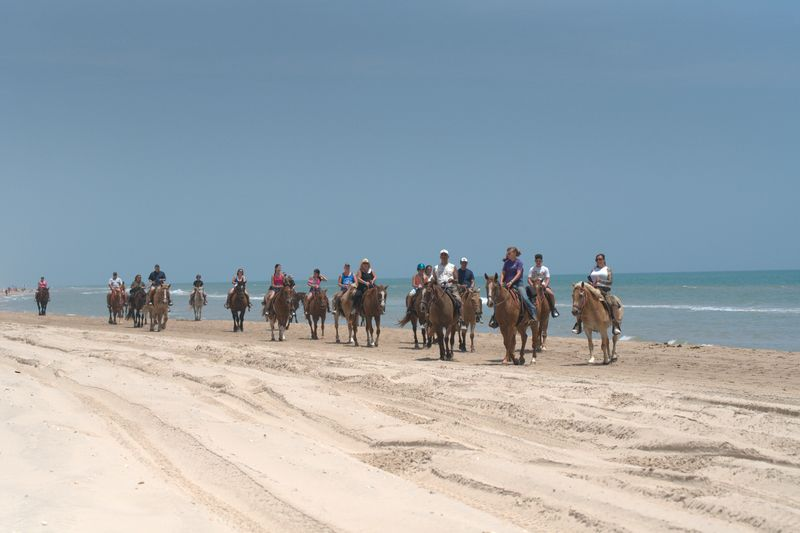
On a guided beach ride you are not navigating. The horses travel in a line, each one following the tail ahead, and the lead horse is under a guide who has done this route more times than they can count. Your job is to sit there and hold the reins in a relaxed way and look at the Gulf. That’s genuinely most of it. The horses want very little direction from you, which is precisely why complete beginners manage fine.
Compare that to what people imagine, which is some kind of solo negotiation with a large animal that has its own ideas. Not the situation. You’ve joined a queue of horses who all know the job, and the horse under you has done this walk hundreds of times with hundreds of nervous strangers on its back.
The First Ten Minutes
Here’s the honest version, minute by minute, because nobody ever describes this part.
Getting on feels awkward. Everyone’s does. You’re higher up than you expected, the ground looks further away than it did from the fence, and for roughly ninety seconds your body is convinced this is a mistake. Then the line starts moving, and the horse’s walk turns out to be slow and rhythmic and much steadier than you’d braced for, and somewhere around the third or fourth minute your shoulders drop about two inches and you realise you’ve been holding your breath.
That’s the whole arc. Nervous, then fine. Guides see it happen on every single ride and they’re watching for it, which is why they’ll usually say something to you right around the point it clicks.
Then you come over the dune and see the beach, and people have been known to get emotional about that bit. It’s an unusually good moment.
Is It Hard? Physically, No
Nothing about a beach ride is athletic. You’re walking. The horses walk, the ride walks, and on the Moonlight Ride it’s walk-only from start to finish by design.
What you will feel is your inner thighs, a bit, and only if you’ve never done it. An hour on the Family Favorite is short enough that most first-timers walk away completely fine and slightly surprised at themselves. Ninety minutes on the Morning Special is more time in the saddle and you might notice it the next morning in a mild, pleasant, I-did-something-yesterday sort of way. Nobody is limping.
There’s no fitness requirement to clear and no skill to demonstrate. What matters is being at least 6 years old and under 300 lbs, and everyone gets weighed on arrival, which is about the extent of the gatekeeping.
But What If the Horse Does Something
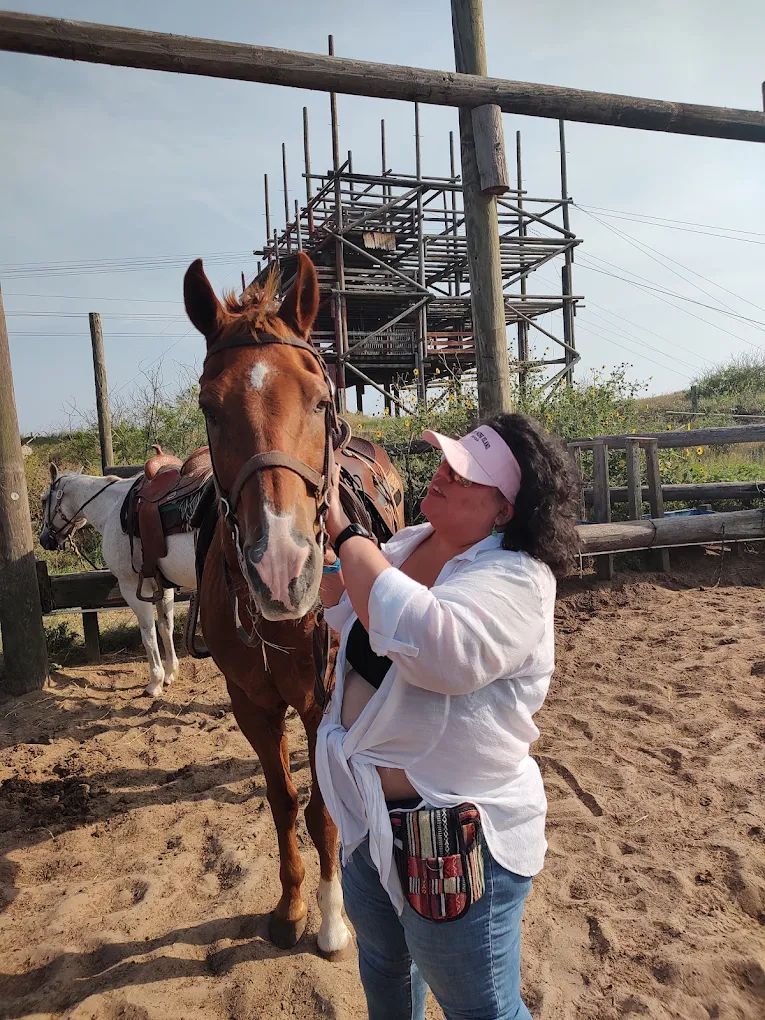
Fair question, and the honest answer is that occasionally something small happens and a guide sorts it out in about four seconds.
A horse might stop to sniff at something. A rein might slip. On one ride a guest dropped a rein and it tangled round the horse’s leg, and the guide had the animal calm and the situation fixed before it became anything at all, which is roughly how these things go. Guides ride with you. They’re not supervising from a distance, they’re in the line, and handling exactly this is the job they do every day.
The other thing worth saying plainly: these are not high-strung animals. Guests describe them as placid over and over, and placid is the correct word. A horse that spooked easily would not last a week doing beach rides with beginners.
What to Actually Do With Your Body
Simplest instructions in the world, and the guides give you all of this before you mount.
Sit up. Heels down. Hands relaxed and low. Don’t yank anything. If you’re unsure, ask the guide, who would genuinely rather answer a question than watch you sit there tense and silent for an hour wondering.
Beyond that, breathe and look around. The most common regret from first-timers is not that they found it difficult, it’s that they spent the first half concentrating so hard on doing it right that they forgot to look at where they were, which on this stretch of coast is a waste of a very good beach.
What to Wear, Briefly
Nothing specialised. Nobody expects boots and nobody is going to look at your jeans.
Long shorts or thin trousers sit more comfortably against a saddle than bare legs do, which is the only real clothing consideration in the whole thing. Closed shoes matter more, because a flip-flop that slides off mid-ride is a nuisance for you and for the guide who has to stop the line. Trainers are fine. Anything that stays on your foot is fine.
Beyond that, sun protection and something to keep your hair out of your face. That’s the entire list.